Golf Courses
Never miss an open event
Create a free account to save preferences, follow courses to be notified when new tournaments are added and receive our monthly newsletter.

Showing 24 of 78 courses
Blairgowrie Golf Club
Perthshire 6 upcoming events
Founded in 1889, Blairgowrie Golf Club is situated in the Perthshire countryside approximately 16 miles north of Perth, at the foot of the Grampian Mountains. The club offers 45 holes across three courses, all set within heather-lined avenues of pine and silver birch. The flagship Rosemount Course is an 18-hole par-72 layout measuring 6,590 yards from the medal tees. Originally designed by Dr Alister MacKenzie and substantially revised by James Braid in the 1930s, it is consistently ranked among Scotland's finest inland courses. Fairways are generously wide by championship standards, rewarding accuracy over power, with a moorland feel underfoot and each hole playing in relative isolation through woodland. Notable holes include the demanding 461-yard opener, the par-3 15th ("Wee Dunt") at just 129 yards but well-bunkered, and the dogleg 18th. The course hosted Greg Norman's first European Tour victory in 1977 and holds the world record for consecutive birdies - 10 - set in 1973. The Lansdowne Course, also 18 holes and par-72 at 6,913 yards, was designed by Peter Alliss and Dave Thomas and opened in 1979. It offers a tighter, more demanding test with smaller greens and tree-lined fairways placing a premium on accuracy. It has hosted the Scottish Amateur Championship and PGA Championship Final. The 9-hole Wee Course (2,327 yards) retains elements of MacKenzie's original layout.
Bury Golf Club
Greater Manchester 2 upcoming events
Bury Golf Club is an 18-hole semi-moorland course spanning 6,063 yards, designed by Dr. Alister MacKenzie in collaboration with Charles Hugh Alison and Harry Shapland Colt in 1920. Located at Blackford Bridge in Bury, Greater Manchester, the course is renowned as one of the best moorland golf courses in the Manchester area. The layout features undulating contours and diversified natural features, with no two holes aligned in the same direction, providing variety and fair challenge. The course is distinguished by three classic holes showcasing MacKenzie's signature two-tier greens, reflecting his philosophy of blending courses harmoniously with the natural landscape rather than imposing upon it. The club boasts significant historical connections, notably through Harry Vardon, the six-time Open Championship winner who served as golf professional from 1902. An annual open competition is held in his honour, and the main function room bears his name. Established in 1890 at Redvales before relocating to its current Blackford Bridge location, Bury Golf Club has been refined over 100 years of dedicated stewardship, maintaining its reputation as a challenging and prestigious moorland venue.
Halifax Golf Club
West Yorkshire
Nestled beneath the dramatic Pennine hills at Ogden, Halifax Golf Club is a demanding moorland course established in 1895 and shaped by renowned architects James Braid and Dr Alister MacKenzie. The par 70 layout stretches just over 6,300 yards but plays considerably longer due to significant elevation changes and rugged terrain. The course features five tee options (White, Yellow, Red, Blue, and Silver) accommodating various skill levels. The front nine presents long dog-legs, streams, and uphill approaches testing accuracy and stamina, while the back nine includes split fairways and blind tee shots with two well-designed par 5s offering scoring opportunities. Notable features include the MacKenzie-designed par-3 2nd hole with its raised green, requiring precision play throughout. The dramatic downhill 17th hole features a 60-foot elevation drop from tee to green, demanding thoughtful club selection. The course is characterized by pristine turf, panoramic views, and consistently engaging design that rewards strategic play. Rated 10th best in Yorkshire and 38th in England, Halifax delivers an authentic golfing experience ideal for players who embrace challenge in a breathtaking moorland setting.
 Low Laithes Golf Course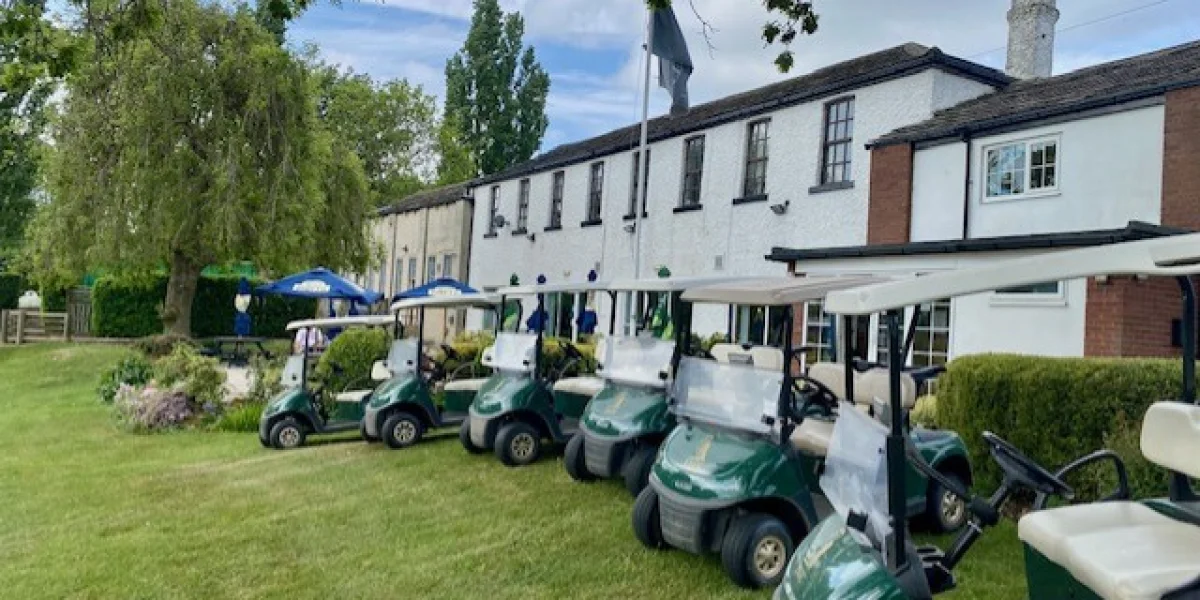
Moortown Golf Club
West Yorkshire 2 upcoming events
Founded in 1909, Moortown Golf Club was designed by renowned architect Dr Alister MacKenzie, who also created Augusta National and Cypress Point. Set across 175 acres of dramatically contrasting woodland and moorland terrain, the course features primarily level topography characteristic of an inland layout. Moortown holds a prominent position among England's finest championship courses and is particularly notable for hosting the first Ryder Cup match on British soil in 1929. The club has established a rich tournament history, hosting numerous professional and amateur championships with notable winners including Sir Nick Faldo, Bernard Gallagher, Danny Willett, and Sir Michael Bonallack. Recognized as a Top 100 Golf Course, Moortown combines MacKenzie's masterful design with its distinctive Yorkshire setting. The course's landscape of mixed woodland and open moorland creates varied playing conditions, while its championship status reflects both its technical difficulty and enduring design quality. The combination of strategic routing, natural terrain, and MacKenzie's architectural principles continues to challenge golfers across all levels.
 Teignmouth Golf Course
Devon 2 upcoming events
Teignmouth Golf Club is an 18-hole moorland links course designed by the legendary Dr Alister MacKenzie, opening in 1924-nine years before he completed Augusta National. Located near the South Devon coast at 800 feet above sea level, the course commands spectacular views of the sea and nearby moors, providing a distinctive scenic setting. The course presents a notable test of golf for players of all abilities, featuring six varied and challenging par 3s and notably eleven two-tier greens, a signature characteristic of MacKenzie's design philosophy. The moorland terrain and elevation create varied playing conditions across the layout. The course has established itself as a significant competition venue, hosting events including the English Boys County Finals and various open competitions. Its heritage and design pedigree make it a respected fixture in Devon golf, combining challenging architecture with outstanding natural landscape features characteristic of the region's moorland environment.
Alwoodley Golf Club
West Yorkshire 1 upcoming event
Alwoodley Golf Club is regarded as one of Britain's finest inland courses, located on Wigton Moor north of Leeds. Designed by Dr Alister MacKenzie in 1907, it was his first course design and is known as "The Original MacKenzie." The course has been lengthened to over 6,900 yards from the championship tees and features the classic MacKenzie layout that remains largely unchanged. Set on natural heathland, the course is characterized by tight, springy, fast-running fairways cut through heather and gorse, with occasional rocky outcrops. The terrain offers firm playing conditions typical of moorland courses. The design demonstrates MacKenzie's trademark subtlety and sophistication, with fairways that require precision play. The course ranks among Great Britain and Ireland's top 100 courses and holds significant historical importance as MacKenzie's inaugural design before he went on to create world-renowned layouts including Augusta National, Cypress Point, and Royal Melbourne. MacKenzie was a founder member and served as the club's first secretary before becoming captain in 1912.
Augusta National Golf Club
GA
Augusta National Golf Club is an 18-hole, par-72 course located in Augusta, Georgia, measuring 7,545 yards from the championship tees. It was co-founded by Bobby Jones - the greatest amateur golfer of his era - and businessman Clifford Roberts, who together purchased the former Fruitland Nurseries site in 1931. The course was designed by Dr. Alister MacKenzie, at the time already regarded as one of the foremost golf architects in the world, with credits including Cypress Point, Royal Melbourne, and Crystal Downs. MacKenzie had the entire course designed from topographic maps before setting foot on the property. The club opened for play in January 1933, and since 1934 has hosted the Masters Tournament, one of the four major championships in professional golf and the only major played each year at the same venue. Design philosophy and layout MacKenzie and Jones shared a conviction that great golf courses should be strategic rather than penal - rewarding bold, well-executed shots while offering multiple lines of play to golfers of all abilities. They built Augusta with unusually wide fairways, devoid of appreciable rough for much of its history, while green complexes were intended to be especially challenging, the often severe contouring of the putting surfaces greatly favouring approach shots played from specific positions. MacKenzie drew heavily on the great holes of British links golf, particularly the Old Course at St Andrews, and no fewer than nine holes bear specific characteristics of famous British holes, with several being nearly direct replicas. The course plays to a par of 72, comprising four par 3s, ten par 4s, and four par 5s. Each hole carries the name of a tree or flower native to the property - Tea Olive, Pink Dogwood, Flowering Peach, Flowering Crab Apple, Magnolia, Juniper, Pampas, Yellow Jasmine, Carolina Cherry, Camellia, White Dogwood, Golden Bell, Azalea, Chinese Fir, Firethorn, Redbud, Nandina, and Holly. The outward nine plays generally uphill and across more open terrain, while the inward nine descends into a lower, more wooded section of the property where water comes dramatically into play. Signature holes and Amen Corner The second shot at the 11th, all of the 12th, and the first two shots at the 13th hole are nicknamed "Amen Corner" - a term coined by golf writer Herbert Warren Wind in a 1958 Sports Illustrated article. This stretch of three consecutive holes, clustered around Rae's Creek in the lowest part of the property, has determined the outcome of more Masters tournaments than any other section of the course. The par-3 12th, Golden Bell, is arguably the most famous short hole in golf. At 155 yards it is the shortest hole on the course, but the swirling, unpredictable winds that funnel through the trees make club selection treacherous. The creek runs directly in front of a narrow, angled green guarded by bunkers front and rear. The essence of the hole has remained virtually unchanged since its original design, and it is historically the fourth toughest hole on the course. The par-5 13th, Azalea, is one of the great risk-reward holes in championship golf - a sweeping dogleg left of 510 yards where the long hitter who draws the ball can attack the green in two, but where Rae's Creek runs along the left side and curls in front of the putting surface to punish any misjudgement. The hole was lengthened with a new back tee in 2023 as part of the club's ongoing efforts to maintain its challenge in the face of equipment advances. The par-5 15th and par-3 16th form a second concentration of water drama on the back nine, where ponds in front of both greens have swallowed countless Masters hopes. The 18th, Holly, climbs steeply uphill through a tree-lined chute to a two-tiered green, providing one of the most visually iconic closing holes in major championship golf. Continuous evolution Augusta National was described by the late golf writer Charles Price as never the most revolutionary golf-course design in America, but certainly the most evolutionary. The nines were reversed almost immediately after opening - what is now the 10th hole was originally the 1st - and the course has been subject to near-continuous modification ever since. Significant contributors to its reshaping over the decades have included Perry Maxwell, Robert Trent Jones, and Tom Fazio, with Jack Nicklaus also providing architectural counsel. The course has an unofficial USGA rating of 78.1, assessed in 2009, as Augusta National has never submitted to an official rating. Its greens are maintained to exceptional speed and firmness, assisted by the SubAir underground ventilation and irrigation system installed in 1994. Tournament history The Masters has been held at Augusta every peacetime April since 1934, making it the longest-running major championship at a single venue. The tournament has produced some of the most celebrated moments in golf history - Jack Nicklaus's sixth and final green jacket in 1986 at age 46, Tiger Woods's record-breaking 18-under-par victory in 1997, and Gene Sarazen's double eagle on the 15th in 1935, known as "the shot heard round the world." Augusta National was ranked the top course in the United States in Golf Digest's 2009 rankings of America's 100 greatest courses.
Bolton Old Links Golf Course
Greater Manchester 6 upcoming events
Bolton Old Links Golf Club is an 18-hole moorland championship course designed by the renowned architect Alister MacKenzie. Located in Bolton, United Kingdom, it features a challenging Par-72 layout comprising two loops of nine holes, with the front nine surrounded by the back nine. The course sits in an exposed moorland setting where wind is a significant factor in play. The terrain offers magnificent panoramic views, particularly from the 12th hole at the course's highest point, which overlooks four surrounding counties. The course is characterized by its demanding greens that contribute substantially to its difficulty level. Bolton Old Links has hosted prestigious tournaments including the 2023 Lancashire Amateur Open Championship and serves as home to the Lancashire PGA Open. The club features on-site facilities including a resident PGA Professional, a well-stocked pro shop, buggy and trolley hire, and a state-of-the-art indoor swing studio with a GC2 simulator. Additional amenities include a clubhouse with bar and catering, function suites, and an on-course facility called The 19th Hole.
Bonnyton Golf Club
East Renfrewshire
Bonnyton Golf Club is an 18-hole championship course located in Eaglesham, Glasgow, designed by the renowned Dr. Alister Mackenzie between March 1922 and June 1923. The course officially opened with an exhibition match featuring notable golfers including Walter Hagen, George Duncan, Abe Mitchell, and J.H. Kirkwood. The course is characterized as "Augusta National's Scottish Sibling," reflecting Mackenzie's design philosophy and architectural significance. Set on moorland terrain, Bonnyton offers a challenging layout typical of Mackenzie's strategic design principles, combining natural landscape features with carefully positioned hazards. The club has gained recognition as a "hidden gem" in Scottish golf, attracting both members and visitors seeking a high-quality playing experience. The moorland setting provides scenic views and distinctive playing characteristics, with the course layout designed to test golfers of varying abilities through intelligent hole design rather than excessive length. Bonnyton offers various membership categories including junior, midweek, ladies, and full membership options, alongside visitor booking facilities. The club features professional services including PGA lessons and custom club fitting, complementing the championship-quality course experience.
Boughton Park (Worcester Golf and Country Club)
Worcestershire 9 upcoming events
Boughton Park is home to Worcester Golf and Country Club, a parkland course designed in 1927 by Dr Alister Mackenzie, the renowned Scottish golf architect. Located just minutes from Worcester City Centre, the course measures 6,251 yards and is set within scenic grounds offering views of the nearby Malvern Hills. The course features a distinctive design characteristic: long, narrow greens that demand accuracy from golfers of all ability levels. This layout provides a challenging yet fair test of play across the parkland setting. The combination of Mackenzie's classic design principles and the natural landscape creates a course that balances difficulty with playability. As a historic course with notable design credentials, Worcester Golf and Country Club has hosted significant tournaments, including Junior Team Golf Regional Finals, attracting competitive play and recognition within the golfing community. The course has also been featured in Golf Monthly as a hidden gem, acknowledging its quality and appeal despite relative obscurity compared to more famous venues. The setting within Boughton Park's natural landscape, combined with Mackenzie's architectural expertise, establishes this as a course of considerable interest to golfers seeking both historical significance and quality play.
Bramall Park Golf Club
Greater Manchester 6 upcoming events
Bramall Park Golf Club is a mature 18-hole parkland course founded in 1894 and redesigned in 1921 by renowned architect Alister MacKenzie, whose portfolio includes Augusta National. Located in Bramhall, Stockport, in Cheshire, the course features undulating terrain with fairways lined by mature native trees, creating a scenic and challenging layout. The undulating landscape and tree-lined fairways characterize the course's difficulty and playing conditions. The club is widely recognized as one of the most popular courses in the region and welcomes visitors of all abilities. Bramall Park offers comprehensive practice facilities including multiple greens and bunkers, allowing golfers to practice all aspects of their game. The club accommodates corporate groups and societies of varying sizes and provides flexible membership options for golfers of all ages and skill levels.
Branshaw Golf Course
West Yorkshire
Branshaw Golf Club is an 18-hole course featuring a unique design by James Braid and Dr Alister Mackenzie, the renowned architects of Gleneagles and Augusta National. Located in Bronte country near Haworth in Yorkshire, the course is situated just five minutes from the village and offers stunning views across the moorland landscape. The course is set on Branshaw Moor in the heart of traditional Yorkshire countryside, providing a picturesque setting characteristic of the region's terrain. The club emphasizes its traditional Yorkshire hospitality and welcomes both visitors and golfing groups. Branshaw offers comprehensive facilities including a clubhouse with professional catering services capable of accommodating events from intimate 65-seat dinners to larger 120-person standing receptions. The course maintains an active membership program and welcomes society bookings. A PGA Head Professional is on staff to support golfers of various abilities. The layout and challenge characteristics reflect the classic design principles of Braid and Mackenzie, incorporating the natural moorland terrain into the course routing.
Bruntsfield Links Golfing Society
Edinburgh
Bruntsfield Links Golfing Society, founded in 1761, is the fourth oldest golf club in the world. Located just 3 miles from Edinburgh city centre, this mature parkland-style course features 18 holes and was originally designed by Willie Park Jnr. The layout has been refined by renowned architects including Dr Alister MacKenzie, James Braid, and Fred Hawtree. In 2018, the course underwent significant redevelopment by Tom Macenzie of MacKenzie Ebert, which included a comprehensive review of all bunkering, remodelling of seven holes, and the introduction of three new holes. The course is set within a parkland landscape offering views and varied terrain typical of Scottish golf. The club's prestige is underscored by its selection as a Qualifying Venue for The Open Championship between 2011-2015 by the R&A, demonstrating the course's championship-standard quality. Positioned one hour from St Andrews, Bruntsfield Links remains one of Scotland's most prestigious golfing establishments, combining historic significance with modern course management and facilities.
California Golf Club of San Francisco
CA
California Golf Club of San Francisco, founded in 1918, is a private 18-hole course located on the Peninsula south of San Francisco. Originally designed by Willie Locke and A. Vernon Macan, the course opened in 1926 on approximately 425 acres of the former Baden Farm. The layout features rolling hills, timbered land, and bay views that create a distinctive Northern California setting. Alister MacKenzie redesigned the bunkering and at least two greens shortly before his work at Cypress Point Club. In 2007-2008, Kyle Phillips restored the course to its "golden age" design, implementing fine fescue grass that produces the fast, firm playing conditions the course is known for-unique in the region. The course is designed primarily as a walking layout with caddies available upon request. It features scenic hole-by-hole routing across the property's natural terrain. The club maintains a traditional, formal atmosphere with strict dress codes and an expected pace of play of 3 hours 45 minutes for a four-ball.
Carnarvon Golf Course
New South Wales 55 upcoming events
Carnarvon Golf Club is a premier 18-hole golf course located in Lidcombe, Sydney, near Burwood, Silverwater, and Strathfield. The par-72 course stretches 6,170 metres and was designed according to the philosophy of renowned course designer Dr. Alister MacKenzie. The layout offers a balanced challenge suitable for both casual and professional players, featuring bunkers, mounds, and large undulating greens. The course is maintained to high standards year-round with immaculate kikuyu fairways and Poa Annua/Bentgrass greens set across rolling terrain. Heavily tree-lined fairways provide scenic appeal and shelter for local birdlife. The course has gained recognition as one of Australia's 50 best courses accessible for under $50. The setting is easy to walk and picturesque, with the club welcoming junior golfers through its Active Kids Program and dedicated junior development initiatives. An onsite restaurant, Carlo Dragon, offers dining with views of the course.
Cavendish Golf Club
Derbyshire
Cavendish Golf Club, opened in 1925, is a championship course designed by renowned architect Dr Alister MacKenzie in Buxton, Derbyshire. The course is regarded as MacKenzie's inspiration for Augusta National, featuring similar design elements including undulating fairways, elevation changes, sloping greens, and strategically positioned hazards that mirror holes at Augusta. Measuring under 6,000 yards, Cavendish is recognized as one of the world's finest layouts at this length and ranks among the top 100 golf courses globally. The course is set amid spectacular Derbyshire scenery with challenging terrain that demands precise shot-making. Its compact yardage belies the difficulty, as the strategic course design and MacKenzie's signature green complexes create a test of skill and strategy rather than length. The well-preserved design reflects MacKenzie's philosophy of following nature's irregular lines, resulting in a course that blends seamlessly with its natural surroundings. The combination of the pristine playing surfaces, elevated tee shots, and thought-out hazard placement provides consistently engaging golf. Cavendish attracts serious golfers seeking an authentic, historically significant MacKenzie design that offers both challenge and aesthetic appeal in an intimate, exclusive setting.
City of Newcastle Golf Club
Tyne and Wear
City of Newcastle Golf Club is located near Three Mile Bridge in Gosforth, Newcastle upon Tyne, on the site of the former Grange Farm. Founded in 1891, the club originally played on the Town Moor before relocating to its current location in 1907. The 18-hole course was originally designed by Harry Vardon, with significant redesign work undertaken by Alister MacKenzie in 1913, who redesigned 12 holes. MacKenzie's work on the 14th hole is featured in his influential book, Golf Architecture. The course retains much of the original vision from both designers and is regarded as one of the finest courses in the North East. It regularly hosts County and National competitions. The clubhouse offers panoramic views of the 1st and 18th holes and provides bar, restaurant, and function facilities suitable for various events including weddings and private dining.
Cleckheaton & District Golf Club
West Yorkshire 5 upcoming events
Founded in 1900, Cleckheaton Golf Club's current 18-hole parkland course was designed by renowned architect Dr Alister MacKenzie and opened on 29th July 1922. The course measures 6,155 yards with four tee colour options, offering a genuine challenge for golfers of all abilities. Located in West Yorkshire just off Junction 26 of the M62, south of Bradford, the course is positioned within 40 minutes of Manchester, York and Sheffield. The layout features testing par 3s and risk-reward holes suited to longer hitters, with notable characteristics including strategic bunkering, trees framing several holes, and undulating greens. Key features include the elevated par 3 15th hole and the dog-leg par 4 16th, which offers a risk-reward option over a valley to a hidden green. The course presents specific challenges throughout, including prevailing wind considerations on several holes, out-of-bounds areas requiring precision, and varying green complexities. The parkland setting provides an engaging design with natural hazards and terrain variation. The facility includes practice grounds, a golf simulator, and clubhouse amenities, welcoming both visitors and society groups alongside its active membership.
Cork Golf Club
County Cork
Cork Golf Club, established in 1888, is a prestigious parkland course designed by Alister MacKenzie, the renowned architect of Augusta National. Located in Wallingstown, Little Island, near Cork City, the course is carved from historic limestone quarries and winds along the banks of the city's Inner Harbour, offering distinctive views and challenging terrain. The course showcases MacKenzie's signature design principles, with particular acclaim for the stretch of holes from the 4th to 10th, which has been compared to Amen Corner at Augusta. These middle holes, particularly the 4th, 5th, and 6th, are highlighted as exceptional examples of strategic parkland golf. The course has won multiple awards, including Best Parkland Course in Munster (2012-2013) and recognition as a Golfers' Choice Recommended Certificate course in 2018. Cork Golf Club presents a stern test requiring strategic shot placement and course management rather than length alone. The conditioning is consistently praised, and the course has hosted notable golfers and tournaments throughout its history. The layout successfully balances the natural limestone setting with MacKenzie's architectural vision, creating a modern yet historically significant golfing experience that stands apart from Ireland's typical links courses.
Crosland Heath Golf Course
West Yorkshire 6 upcoming events
Crosland Heath Golf Club is a heathland course designed by Alister MacKenzie, remaining relatively unchanged from its original design over 100 years ago. Located in Huddersfield, the course features free-draining fairways characteristic of heathland terrain. The layout is distinctive for its strategic design, with par 5 and par 3 holes running in opposing directions, as do the opening four holes, requiring golfers to play toward all points of the compass. Notable features include stunning "tower" par 3 holes built around old quarries, which provide both visual interest and challenging elevated tee shots. This design ensures varied wind exposure and playing conditions throughout the round. The course maintains its historical integrity while offering a traditional links-style experience despite its inland location, making it a notable example of MacKenzie's architectural principles applied to heathland terrain.
Crowborough Beacon Golf Club
East Sussex
Crowborough Beacon Golf Club is an 18-hole heathland course situated near the town of Crowborough in East Sussex, set on the southern slopes of the High Weald at around 800 feet above sea level, making it one of the highest points in the county. Golf was first played here in October 1895, when nine holes were laid out on the Alchorne estate, with the course extended to 18 holes in 1905. The original designer is unknown, but Dr Alister MacKenzie was commissioned in the 1920s to redesign eight of the holes, for which he was paid £700. The course measures 6,319 yards from the back tees and plays to a par of 71, with a slope rating of 133 reflecting its genuine difficulty. The layout is characterised by undulating terrain, mature heather and gorse, oak, birch and pine woodland, and relatively small, subtly sloping greens. Natural hollows and grassy run-offs are as prevalent as sand bunkers, and the course rewards accuracy and course management over length. The layout follows a broadly out-and-back routing with some of the finest holes found around the turn. The par-three 6th, known as The Speaker after a former club member who served as Speaker of the House of Commons, is widely regarded as the signature hole, requiring a carry across a wide gully to a well-guarded green. The 18th is considered among the most demanding finishing holes in Sussex, a right-to-left dogleg of 443 yards lined with heather that plays gently uphill to the clubhouse. The club holds a notable literary connection: Sir Arthur Conan Doyle, creator of Sherlock Holmes and a local resident, served as club captain in 1910, and his wife and son were also members. Golf writer Bernard Darwin, writing from the clubhouse terrace in 1926, described the panoramic view across the South Downs as among the finest in all of England. The course sits within an Area of Outstanding Natural Beauty and has changed relatively little over the past century.
Cypress Point Club
CA
Cypress Point Golf Course is an 18-hole, par-72 course designed by the legendary Alister Mackenzie and opened in 1928 on California's Monterey Peninsula. With a yardage of 6,536 and a slope rating of 136, the course presents a formidable challenge while maintaining exceptional playability. Mackenzie famously noted the site's "glorious combination of rocky coast, sand dunes pine woods and cypress trees," which he incorporated organically into the design rather than imposing artificial structure. The front nine winds through the Del Monte forest before the back nine emerges onto the dramatic rocky coastline. The course features back-to-back par threes at holes 15 and 16, with the signature 231-yard par-three 16th requiring a shot over the Pacific Ocean to a mid-sized green. The finishing holes, including the spectacular par-four 17th, are consistently regarded as among golf's finest. Cypress Point has hosted prestigious tournaments including the Walker Cup in 1981 and previously served as co-host for the AT&T Pebble Beach National Pro-Am through 1991. Consistently ranked in Golf Magazine's top three courses worldwide, Cypress Point remains one of the most exclusive and revered courses in golf history.
Darlington Golf Course
County Durham 1 upcoming event
Darlington Golf Club is an 18-hole parkland course founded in 1908 and designed by Dr Alister Mackenzie, the architect of Augusta National. Located in Darlington, County Durham, the course shares many design similarities with the Masters' track, featuring huge rolling greens, lush tree-lined fairways, and challenging semi-rough. The course presents a varied test of golf suitable for players of all abilities. Its parkland setting provides an attractive landscape with characteristic Mackenzie design elements that demand precision from golfers. The layout challenges players with strategic bunkering and undulating terrain typical of the designer's philosophy. Darlington hosts numerous competitions throughout the year, including men's, ladies, juniors, and mixed club competitions from April to September, with winter leagues played on Sundays from October to March. The club also regularly hosts open competitions and regional events. Visitors are welcome at this private members club, which provides full bar and catering facilities in its clubhouse, with patios overlooking the first tee and tenth green. The venue also offers function rooms available for private hire.
Follow this Course
Create a free account to follow courses and get notified when new events are added.
★ Create Free Account Log In